


Why Connection Matters Most: Meeting the Deepest Need in Youth Development Today
- alpeshp1
- Oct 15, 2025
- 5 min read
Here's something that might surprise you: while most youth programs focus on activities, skills training, or problem-solving, there's one critical element that actually determines whether a young person thrives or just gets by. It's not the coolest technology, the best facilities, or even the most innovative curriculum. It's something much simpler and infinitely more powerful: genuine human connection.
At True Believers Community Connections, we've seen this reality play out countless times in Chicago's Southside communities. The young people who transform their lives aren't necessarily the ones in the programs with the biggest budgets or flashiest resources. They're the ones who find adults who truly see them, believe in them, and stick with them through thick and thin.
The Crisis Hidden in Plain Sight
Let's be real about what's happening with our youth today. The statistics are sobering: one in five young people report having no meaningful developmental relationships in their lives at all. Another 20% have only one such relationship. That means 40% of our young people are trying to navigate the most challenging period of their lives with little to no authentic support.

Think about that for a moment. Nearly half of our youth are essentially going it alone during the years when they're figuring out who they are, what they're capable of, and how they fit into the world. No wonder we're seeing increased rates of anxiety, depression, and risky behaviors among teenagers.
What Science Tells Us About Connection
The research on this is crystal clear. The National Longitudinal Study of Adolescent Health found that young people who felt genuinely connected to home or school were up to 66% less likely to engage in risky behaviors related to substance use, sexual health, and violence. They also maintained better mental health well into adulthood.
But here's what really gets me excited: the Harvard Study of Adult Development followed over 700 people for more than 70 years and concluded that people connected to family, school, and community are happier, live longer, and stay healthier than their less connected peers. We're not just talking about feeling good in the moment: we're talking about fundamentally changing life trajectories.
As Dr. Robert Waldinger from Harvard puts it: "Good relationships keep us happier and healthier. Period."
Beyond the Surface: What Real Connection Looks Like
When we talk about connection at True Believers, we're not talking about being friendly or checking in occasionally. We're talking about what researchers call "developmental relationships": deep bonds where young people discover who they are, develop their abilities, and learn how to contribute to their world.
These relationships have five key elements that every young person needs:
Knowing they matter. This isn't just about self-esteem boosting. It's about young people understanding they're valued and significant to the adults in their lives.
Being challenged to grow. Real connection includes appropriate challenge. We don't just make kids feel good: we help them stretch beyond their comfort zones.
Getting help to achieve goals. Connection provides the scaffolding young people need to bridge the gap between their dreams and their reality.
Experiencing respect and collaboration. These aren't adult-to-child relationships: they're partnerships where young people have voice and agency.
Expanding their world. Connection opens doors to new possibilities, people, and places that build confidence and skills.

Why Traditional Approaches Fall Short
Here's the problem with many youth programs today: they treat young people as problems to solve rather than resources to develop. They focus on deficits instead of strengths. They prioritize compliance over connection.
At True Believers, we've learned that when you flip this script: when you see young people as assets and prioritize relationships above everything else: everything changes. Programs become more effective. Young people become more engaged. Communities become stronger.
How True Believers Does Connection Differently
Our approach isn't complicated, but it is intentional. We build developmental relationships through four key phases:
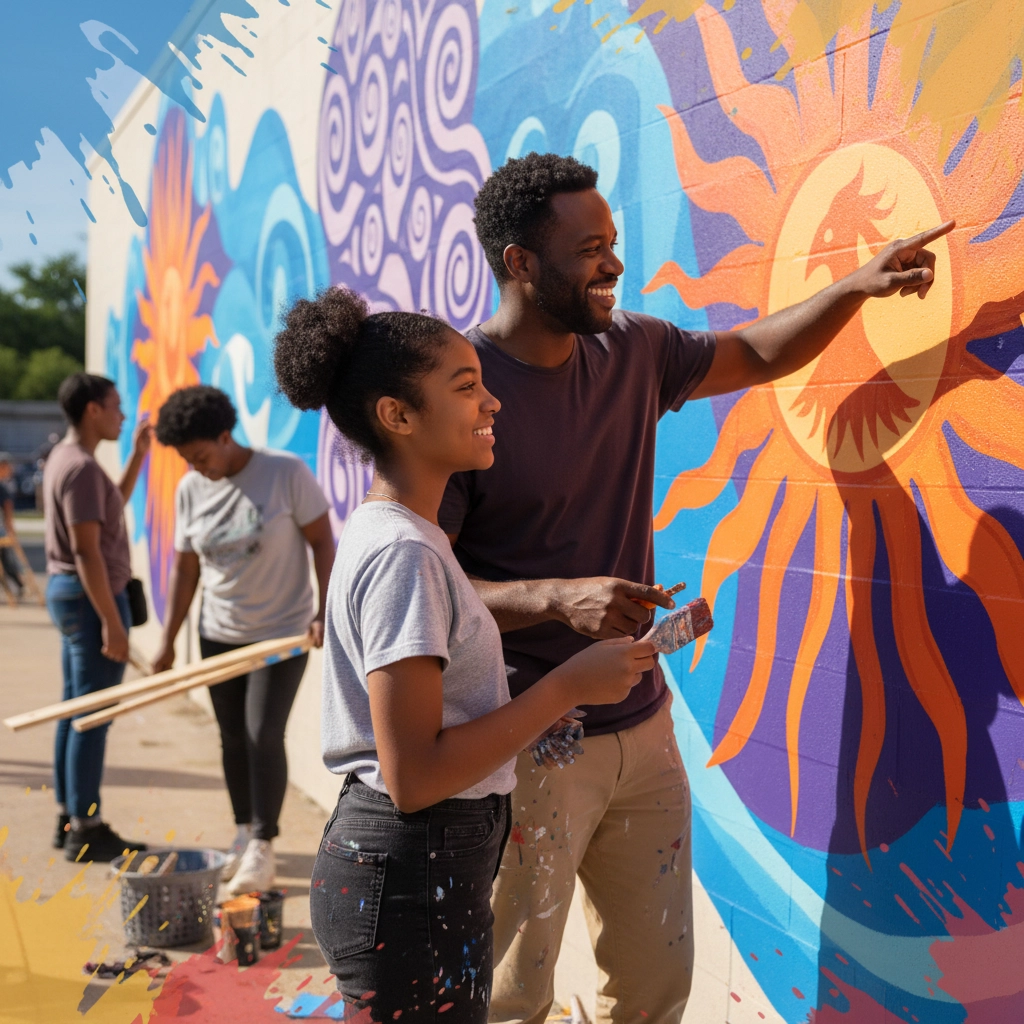
Getting to know each other. Our staff spend time really listening to young people. Not just about their problems, but about their interests, dreams, and perspectives. We share appropriate parts of our own stories too.
Building trust. We show up consistently. We follow through on our commitments. We create safe spaces where vulnerable conversations can happen.
Finding shared commitments. We work together to identify goals and challenges that matter to each young person. We don't impose our agenda: we discover theirs.
Investing in growth. We put our energy into helping young people reach their goals, adapting our relationship as they develop and change.
The Ripple Effect in Our Community
When young people experience authentic connection, the benefits extend far beyond individual outcomes. They show increased academic growth, enhanced social and emotional development, greater sense of personal responsibility, and reduced engagement in risky behaviors.
But here's what excites us most: they become connectors themselves. Young people who experience developmental relationships become more likely to form healthy relationships with peers and eventually serve as mentors to younger kids in their community.
The Multiple Layers That Matter
Family connections remain the most protective force in young people's lives, but research shows that multiple layers of connection create even stronger outcomes. When young people have caring adults in schools, after-school programs, faith communities, and neighborhood organizations, they develop a comprehensive support system that can weather individual relationship changes.
At True Believers, we work intentionally to connect young people not just with our staff, but with other caring adults in their broader community. We're not trying to be everything to everyone: we're trying to be part of a web of support that surrounds each young person.
Moving Forward Together
The beautiful thing about prioritizing connection is that it doesn't require massive budgets or fancy facilities. It requires caring adults who are willing to invest in young people authentically and consistently. It requires organizations that value relationships over programs and outcomes over outputs.
The evidence is overwhelming: when relationships come first, everything else follows. Academic achievement improves. Behavioral problems decrease. Mental health stabilizes. Future opportunities expand.
Taking Action
If you're a parent, educator, or community member who wants to make a real difference in a young person's life, start with connection. Listen more. Share appropriately. Show up consistently. Challenge with love. Believe in their potential even when they can't see it themselves.
If you're interested in learning more about how True Believers Community Connections is building developmental relationships with young people on Chicago's Southside, visit our programs page or check out our upcoming events.
Because at the end of the day, every young person deserves to know they matter, to be challenged to grow, and to have adults in their corner who believe in their potential. That's not just good youth development: that's how we build stronger communities for everyone.
Ready to be part of the connection? Let's talk about how you can get involved.
Comments